Why Flexibility Feels Like Freedom — My Systematic Reset for Body and Mind
You don’t need to be a gymnast to feel the power of flexibility—but I used to think I did. For years, tight hips and constant stress made me feel stiff in body and mind. Then I started treating flexibility not just as physical stretching, but as a full-system practice. What changed? A daily routine blending movement, breath, and mental reset. The result? More ease, less tension—both in my muscles and my thoughts. This is how I rebuilt my mobility, one mindful stretch at a time.
The Hidden Link Between Body and Mind
Flexibility is often misunderstood as a purely physical trait—something you either have or don’t. Many believe it’s reserved for the naturally limber or the young. But in reality, the ability to move freely is deeply intertwined with mental and emotional well-being. Muscle tightness, especially in areas like the hips, shoulders, and lower back, is not just the result of inactivity or aging. It frequently mirrors the state of the mind. When stress accumulates, the body responds by tensing up, often without conscious awareness. A person working long hours at a desk may not realize how much tension builds in the neck and spine until discomfort becomes unavoidable.
This mind-body connection is not just philosophical—it’s physiological. The nervous system plays a central role in regulating muscle tone. When the mind perceives stress, whether from work deadlines or emotional strain, the sympathetic nervous system activates the “fight-or-flight” response. This leads to increased muscle tension, shallow breathing, and a heightened state of alertness. Over time, this chronic activation causes muscles to remain in a semi-contracted state, reducing range of motion and contributing to stiffness. The hips, for example, are a common storage site for emotional tension, and many people report a sense of emotional release when they finally loosen them through consistent, mindful stretching.
Recognizing this link transforms flexibility from a fitness goal into a form of self-care. It shifts the focus from how far one can stretch to how well one can listen to the body. When approached with awareness, stretching becomes a dialogue between body and mind. Each stretch offers a moment to notice where resistance lives—not just in the muscles, but in the thoughts and emotions that accompany the sensation. This awareness allows for a more compassionate approach to movement, one that honors limits rather than fights them. Over time, this practice can lead to a profound sense of internal spaciousness, where physical ease supports mental clarity.
Why “Just Stretch More” Doesn’t Work
Conventional advice often boils down to a simple directive: stretch more. Yet for many, this approach fails to deliver lasting results. They may dutifully hold static stretches for minutes at a time, only to find that tightness returns the next day. The issue is not lack of effort, but a misunderstanding of how the body adapts. Static stretching—holding a position without movement—can provide temporary relief, but it does little to retrain the nervous system’s habitual patterns of tension. Without addressing the underlying neuromuscular communication, gains in flexibility are often short-lived.
Movement science reveals that flexibility is not just about muscle length; it’s about the brain’s willingness to allow greater range of motion. The nervous system acts as a gatekeeper, limiting movement to what it perceives as safe. If the brain senses instability or potential injury, it sends signals to tighten muscles, even if they are physically capable of lengthening. This protective mechanism explains why someone might be able to touch their toes one day and struggle the next, despite no physical change. Factors like fatigue, stress, or poor breathing can influence the nervous system’s threshold, making the body feel tighter even when muscles haven’t shortened.
Another common obstacle is inconsistency. Many people approach stretching as an afterthought—something to do when time allows or pain arises. But flexibility, like any skill, requires regular practice to create lasting change. Infrequent sessions do not provide enough stimulus for neuromuscular adaptation. Additionally, mental resistance plays a role. The belief that stretching is boring, ineffective, or too difficult can lead to avoidance. Without a structured approach, it’s easy to lose motivation. Breathing patterns also matter. Shallow or held breath during stretching signals stress to the nervous system, reinforcing tension rather than releasing it. True progress requires more than passive stretching—it demands engagement of both body and mind.
Building a System, Not a Habit
To create lasting change, flexibility must be approached as a system rather than a habit. A habit is something done repeatedly, often without much thought. A system, on the other hand, is structured, intentional, and designed for continuous feedback and improvement. A well-designed flexibility system includes consistent timing, clear components, and built-in ways to track progress. It’s not about doing more—it’s about doing the right things, in the right order, with the right awareness.
A systematic approach begins with consistency. Practicing at the same time each day—such as in the morning or before bed—helps the body anticipate and respond more effectively. The system should also include three core components: dynamic warm-ups, mindful stretching, and cool-down integration. Dynamic warm-ups prepare the body by increasing blood flow and activating the nervous system. These might include gentle leg swings, arm circles, or cat-cow movements that mimic natural motion patterns. Unlike static stretching, dynamic movements engage muscles through their full range, signaling safety to the brain and reducing the likelihood of injury.
Mindful stretching follows the warm-up, focusing on controlled, sustained movements that encourage neuromuscular re-education. This phase is not about pushing to the edge of discomfort, but about exploring the edge with curiosity and breath awareness. Each stretch becomes an opportunity to observe sensation without judgment. Cool-down integration ensures that the nervous system returns to a calm state. This might involve lying quietly with attention on the breath, or performing gentle movements that reinforce the new range of motion. The entire process emphasizes rhythm over intensity—consistent, moderate effort yields better long-term results than sporadic, aggressive stretching. By treating flexibility as a system, individuals create a sustainable practice that evolves with their needs.
The Mindset Shift That Changed Everything
One of the most significant barriers to improving flexibility is not physical—it’s mental. The belief “I’m just not flexible” can become a self-fulfilling prophecy. This mindset frames flexibility as a fixed trait, like eye color or height, rather than a trainable skill. When people view their tightness as unchangeable, they are less likely to persist through discomfort or setbacks. They may compare themselves to others, feel discouraged, and give up. But research in neuroplasticity shows that the brain and body are capable of change at any age. Flexibility, like strength or balance, can be developed with consistent, mindful practice.
Changing self-talk is a crucial part of this transformation. Instead of saying “I can’t do this,” a more empowering statement is “I’m learning how to do this.” This small shift in language reflects a growth mindset—one that embraces effort, patience, and progress over perfection. Patience, in particular, is essential. Flexibility develops gradually, often in ways that are not immediately visible. A person may not be able to touch their toes after a week of stretching, but they might notice they can bend down to tie their shoes without stiffness. These subtle improvements are real progress, even if they don’t fit the cultural image of “being flexible.”
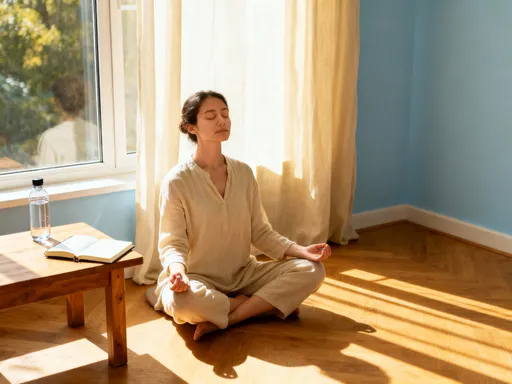
Techniques like body scanning and breath focus deepen this mindset shift. Body scanning involves mentally moving through each part of the body, noticing areas of tension or ease. This practice cultivates body awareness, helping individuals recognize when they are holding stress unconsciously. Breath focus—coordinating inhalation and exhalation with movement—signals safety to the nervous system, making it easier to relax into stretches. Over time, these practices retrain the brain to associate stretching not with struggle, but with release. The result is not just greater physical range of motion, but a more compassionate relationship with the body. This internal shift is often more transformative than any external change.
My Daily 12-Minute Flow (And Why It Works)
After years of trial and error, I developed a daily 12-minute flexibility flow that combines the principles of movement science, nervous system regulation, and practicality. The routine is designed to fit into a busy schedule while delivering measurable results. It consists of three phases: 4 minutes of dynamic warm-ups, 6 minutes of active stretching, and 2 minutes of breathwork. Each phase serves a specific purpose, and together they create a complete system for improving mobility and reducing tension.
The first phase—dynamic warm-ups—focuses on movement that gently mobilizes the joints and activates major muscle groups. It begins with 1 minute of ankle circles and wrist rotations to awaken the extremities. This is followed by 1 minute of arm swings and shoulder rolls to release tension in the upper body. The next 2 minutes are dedicated to spine and hip mobility: cat-cow stretches on the hands and knees, gentle spinal twists while seated, and leg swings to warm up the hip flexors. These movements increase circulation and signal to the brain that the body is preparing for greater range of motion. Unlike static stretching, dynamic movements do not trigger protective reflexes, making them ideal for starting the practice.
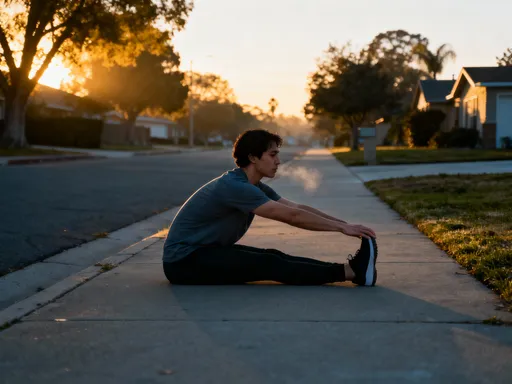
The second phase—active stretching—targets the most common areas of tension: hips, spine, and shoulders. Each stretch is performed with control and breath awareness. For the hips, a modified pigeon pose is held for 1 minute per side, with attention on relaxing the breath rather than forcing the stretch. For the spine, a seated forward fold is practiced with a straight back, allowing gravity to deepen the movement over time. Shoulder tension is addressed with a cross-body arm stretch and a doorway chest opener, both held for 30 seconds. The key is to stay within a “comfortable challenge” zone—feeling sensation without pain. During this phase, the focus remains on exhaling fully, as long exhalations activate the parasympathetic nervous system, promoting relaxation.
The final 2 minutes are dedicated to breathwork. This is not an afterthought—it is a critical component of the system. The breathwork phase begins with diaphragmatic breathing: inhaling deeply through the nose, allowing the belly to rise, and exhaling slowly through the mouth. This is followed by a simple box breathing pattern—inhale for 4 counts, hold for 4, exhale for 4, hold for 4—repeated for 1 minute. These techniques reduce mental chatter, lower heart rate, and reinforce the sense of release achieved during stretching. By ending the practice with breathwork, the nervous system is gently guided into a state of calm, making the entire experience restorative rather than exhausting.
Progress Without the Mirror
One of the most liberating realizations in my flexibility journey was that progress does not need to be seen to be felt. In a culture obsessed with visible results—splits, backbends, perfect form—it’s easy to overlook the internal shifts that matter more. True flexibility is not measured by how far one can reach, but by how well one can move through daily life. The real indicators of progress are subtler: sleeping more soundly, feeling less stiffness after sitting for hours, or noticing that reaching for a high shelf no longer requires effort.
These changes are not always dramatic, but they are meaningful. A mother who can play on the floor with her children without wincing from hip pain is experiencing real flexibility. An office worker who no longer carries tension in their shoulders at the end of the day has gained mobility that enhances quality of life. These outcomes are not dependent on achieving extreme poses, but on restoring natural, functional movement. When the focus shifts from appearance to sensation, the practice becomes more sustainable and more compassionate.
Another internal shift is improved posture. As the body becomes more balanced and less restricted, alignment naturally improves. Rounded shoulders begin to draw back, the head moves into better alignment over the spine, and walking becomes lighter. These changes reduce strain on joints and muscles, preventing long-term wear and tear. Better posture also supports breathing, which in turn supports mental clarity. The connection between physical ease and mental calm becomes increasingly evident. Over time, individuals may find they are not only more flexible in their bodies, but also more adaptable in their thoughts and emotions. They respond to challenges with greater resilience, not because they’ve forced their bodies into new shapes, but because they’ve created space to move—both physically and mentally.
Making It Last: Integration Over Perfection
The greatest challenge in any wellness practice is consistency. Life happens—schedules change, energy levels fluctuate, and motivation wanes. The key to long-term success is not perfection, but integration. A flexibility system should be adaptable, not rigid. Missing a day does not mean failure; it means returning with compassion. Guilt and self-criticism only reinforce the stress response, making it harder to resume the practice. Instead, the focus should be on returning without judgment, recognizing that even a shortened version of the routine is beneficial.
Integration means weaving the practice into existing routines. For some, this means doing the 12-minute flow first thing in the morning. For others, it works better as a wind-down ritual before bed. The practice can also be broken into smaller segments—3 minutes in the morning, 3 at lunch, 6 in the evening. Work breaks are another opportunity: a few shoulder rolls, a seated twist, or a deep breath can reset the nervous system during a stressful day. The goal is not to add more to an already full schedule, but to make movement a natural part of daily life.
Over time, the practice becomes less about following a routine and more about cultivating a way of being. True flexibility is not a destination, but a continuous process of listening, adjusting, and responding. It is deeply personal—what works for one person may need modification for another. The system is not meant to be followed rigidly, but to be adapted with awareness. As the body changes, so should the practice. This adaptability is what makes it sustainable. And when flexibility is approached not as a performance, but as a form of care, it becomes a lifelong companion—one that supports not just movement, but living with greater ease, resilience, and freedom.
Flexibility isn’t about achieving extreme poses—it’s about creating space in your body and mind to move through life with less resistance. By treating it as a holistic, systematic practice, you’re not just loosening muscles; you’re rewiring your response to stress, building resilience from the inside out. The goal isn’t perfection, but presence. And once you feel that shift, you’ll realize: flexibility isn’t just what your body can do. It’s how it helps you breathe, think, and live—freer.