How I Found Calm in Chaos: My Beginner Fitness Journey to Mental Balance
Ever feel overwhelmed by stress, yet too drained to do anything about it? I was stuck in that exact loop—until I discovered how simple movement could reshape my mind. As a total beginner, I didn’t aim for six-pack abs or marathon runs. Instead, I chased something deeper: mental clarity. What started as shaky 10-minute walks became a lifeline. Turns out, your body and mind aren’t separate—they’re teammates. This is how exercise quietly rebuilt my psychological balance, one small step at a time.
The Breaking Point: When Stress Took Over (What It Feels Like)
There was a time when every morning felt like starting the day already behind. The weight of responsibilities—managing a household, keeping up with work deadlines, maintaining relationships—seemed to press down harder each week. I wasn’t clinically depressed, but I existed in a fog of emotional fatigue. Small frustrations would spark sharp reactions. A delayed grocery delivery could ruin my mood for hours. I’d lie awake at night, replaying conversations or worrying about tasks I hadn’t finished. Sleep became shallow, and mornings brought no sense of renewal, only the dread of repetition.
My energy levels hovered near zero. I’d sit through meals without tasting them, scroll mindlessly through my phone, and feel guilty for doing nothing yet too exhausted to do anything meaningful. I knew I wasn’t ungrateful—my life had blessings—but I couldn’t access the joy in them. The emotional flatness was the most alarming part. I loved my family deeply, but I couldn’t always feel it. Laughter felt forced. Calm felt like a memory. It was then I realized: this wasn’t just burnout. It was a signal that my mental ecosystem was out of balance.
The turning point came on an ordinary Tuesday. I stood in my kitchen, staring at a spilled coffee mug, and burst into tears. Not because of the mess, but because it felt like the final straw in a stack of invisible burdens. That moment forced me to ask: if I don’t make a change, what will life feel like in a year? I didn’t want medication as my only option, nor did I believe I needed a dramatic life overhaul. What I needed was a practical, sustainable way to regain a sense of control over my inner world. I began to wonder: could taking care of my body help heal my mind?
The Mind-Body Link: Why Movement Calms the Mind (The Science Made Simple)
For years, I thought of exercise as a way to change how I looked. I associated it with gyms, sweat, and effort that promised a slimmer waistline or toned arms. What I didn’t understand was that the most profound changes from physical activity happen not in the mirror, but in the mind. Modern science now confirms what many have sensed intuitively: movement is medicine for mental health. When you engage in physical activity, your brain releases a trio of powerful chemicals—endorphins, serotonin, and dopamine—that work together to elevate mood, reduce pain perception, and increase feelings of well-being.
At the same time, exercise helps lower cortisol, the hormone most closely linked to stress. When cortisol remains elevated over long periods, it can impair memory, disrupt sleep, and contribute to anxiety. Regular movement acts like a reset button, signaling to the body that it’s no longer in constant survival mode. Think of your brain as a radio tuned to a station filled with static—racing thoughts, worry loops, mental noise. Physical activity doesn’t silence the radio, but it helps you find a clearer frequency. The signal becomes stronger, the interference softer.
What’s remarkable is that you don’t need intense workouts to benefit. Studies have shown that even moderate activities—like walking, gardening, or gentle stretching—can lead to measurable improvements in mood and cognitive function. The key isn’t duration or difficulty; it’s consistency. Over time, these small shifts in brain chemistry add up. Emotional regulation becomes easier. You begin to respond to stress rather than react to it. You gain a sense of agency, a quiet confidence that you can influence your inner state through action.
This understanding changed everything for me. I no longer saw movement as punishment for eating a piece of cake or a chore to achieve a certain body type. Instead, I began to view it as a form of mental hygiene—something as essential as brushing my teeth or getting enough sleep. It wasn’t about aesthetics. It was about creating space in my mind, about giving myself the tools to feel more like myself again.
Starting From Zero: My First Real Step (The Beginner’s Reality Check)
The first time I decided to walk around the block, I stood at my front door for five full minutes, unable to turn the knob. My heart pounded, not from physical exertion, but from anxiety. What if someone saw me? What if I looked awkward? What if I couldn’t finish the loop? These thoughts felt irrational, yet they were paralyzing. I had no fitness routine, no gear, no experience. I wore old sneakers and a sweater two sizes too big, as if trying to hide in plain sight. But I opened the door. That single act—stepping outside—felt like a victory.
The walk itself was unremarkable. Ten minutes. Flat terrain. No music, no podcast, just the sound of my footsteps and the rustle of leaves. But something shifted. The air was cool against my skin. I noticed the way sunlight filtered through the trees. I wasn’t thinking about my to-do list. For the first time in weeks, my mind wasn’t racing. I returned home not energized, but calmer. That small moment planted a seed: maybe I didn’t need to transform my body to benefit. Maybe showing up was enough.
I learned quickly that the biggest obstacle wasn’t physical limitation—it was mental resistance. The voice in my head said, “This won’t help,” “You’re too old to start,” or “Wait until you have more time.” But I began to challenge those thoughts. Instead of aiming for perfection, I focused on presence. I didn’t need to walk fast. I didn’t need to go far. I just needed to move. And in doing so, I was practicing self-care, not self-punishment. I wasn’t chasing an ideal. I was reclaiming a sense of agency over my well-being.
Building the Habit: Tiny Wins That Added Up (Practical First Steps)
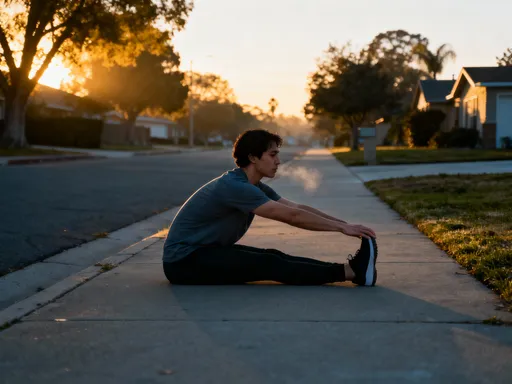
Habits aren’t built in grand gestures. They’re formed in quiet repetitions. After that first walk, I committed to three small practices I could realistically maintain. Each was designed to fit into the rhythm of my day without adding pressure. The first was a five-minute morning stretch. I didn’t follow a complex routine—just reaching my arms overhead, rolling my shoulders, and touching my toes. It took less time than brushing my teeth, yet it signaled to my body and mind: today begins with kindness.
The second was a lunchtime walk. Even on busy days, I made it a rule to step outside for ten minutes. I left my phone in my bag. No calls, no emails, no distractions. Just walking. Sometimes I circled the block. Other times I wandered through a nearby park. The goal wasn’t exercise—it was mental reset. I noticed how the rhythm of my steps created a meditative pace. My thoughts slowed. My breathing deepened. By the time I returned to work, I felt clearer, more centered.
The third practice was an evening “shake-off.” Before dinner, I’d put on music and move my body for five minutes—no rules, no structure. I’d sway, stretch, or even dance a little. It felt silly at first, but it became a ritual of release. The day’s tension would loosen with each movement. To track progress, I used a simple notebook. I didn’t record calories or distance. I wrote one sentence each day: how I felt before and after. Seeing phrases like “felt anxious, now calmer” or “tired but lighter” repeated over weeks gave me quiet motivation. I wasn’t chasing results—I was witnessing transformation.
Environmental cues played a crucial role. I left my walking shoes by the front door. I set a daily phone reminder labeled “Move with care.” These small signals reduced the mental effort needed to begin. Over time, the actions became automatic. I wasn’t relying on willpower—I was building a system that made consistency easier. And with each small win, my confidence grew. I wasn’t becoming an athlete. I was becoming someone who showed up for herself.
When the Mind Resists: Pushing Through Mental Blocks
There were days—many days—when I didn’t want to move. The excuses came easily: “I’m too tired,” “I’ll do it tomorrow,” “It’s raining,” “It won’t make a difference.” These weren’t just lazy thoughts. They were symptoms of a mind accustomed to overwhelm, resistant to change. I began to recognize them as mental blocks, not truths. Instead of arguing with them, I learned to respond with gentle counter-thoughts. “Five minutes still counts.” “You’re doing this for your mood, not your waistline.” “Even a tiny step is progress.”
One of the most powerful shifts was reframing movement as a tool to interrupt negative thought loops. When I felt anxiety rising—when my mind began to spiral into “what ifs” and worst-case scenarios—I’d stand up and walk. Not to escape the feeling, but to create space around it. The physical act of moving helped me step out of my head. I wasn’t suppressing emotions. I was regulating them. Over time, I noticed that the intensity and duration of my anxious episodes decreased. I wasn’t curing my stress—I was building resilience against it.
To make movement more inviting, I paired it with things I already enjoyed. I listened to audiobooks during walks. I played favorite songs while stretching. I took my dog with me, turning exercise into shared moments of connection. Nature became a powerful ally. A walk through a tree-lined street or a quiet path in the park offered sensory grounding—birdsong, fresh air, the scent of earth after rain. These experiences didn’t erase stress, but they softened its edges. I began to see movement not as a chore, but as a gift I gave myself each day.
Finding Joy in Motion: From Duty to Daily Highlight
There came a point when something unexpected happened: I started looking forward to my walks. What had once felt like an obligation became a cherished part of my day. I’d catch myself glancing at the clock, thinking, “Soon, I get to go outside.” The shift wasn’t dramatic—it crept in quietly, like morning light. I noticed how the rhythm of my footsteps created a natural cadence for my thoughts. Worries that felt overwhelming indoors lost their power when met with fresh air and motion.
Sensory experiences deepened the connection. I loved the feeling of sunlight on my face in the late afternoon. I noticed the changing colors of the seasons—the deep greens of summer, the golden hues of fall. I began to walk without a destination, simply to be present. Movement became a form of mindfulness. I wasn’t trying to fix anything. I was just allowing myself to exist, to breathe, to feel alive.
I also discovered playful forms of movement that brought joy. Dancing in the kitchen while waiting for the kettle to boil. Stretching on the living room floor while my cat curled up beside me. Marching in place during TV commercials. These moments weren’t workouts—they were celebrations of my body’s ability to move, to feel, to respond. I stopped measuring success by how far I walked or how long I stretched. Success became how I felt afterward: lighter, clearer, more at peace.
Psychological balance, I realized, wasn’t about achieving a state of constant calm. It was about building a toolkit to return to center when life pulled me off course. Movement became one of my most reliable tools. It wasn’t about perfection. It was about presence. It was about showing up for myself, even on days when I didn’t feel like it. And in those small acts of care, I found a deeper sense of self-worth.
A New Kind of Strength: How Fitness Gave Me Back My Calm
Over months, the changes became undeniable. I still faced stress—life doesn’t stop being demanding—but my relationship with it shifted. I became more resilient. Where I once reacted impulsively to frustration, I now paused. Where I once felt emotionally drained by evening, I found reserves of calm. My sleep improved. I fell asleep faster and woke up feeling more restored. Emotional crashes—those sudden waves of sadness or irritability—became less frequent and less intense.
Interestingly, physical stamina and emotional stamina grew together. The ability to walk for 20 minutes without stopping mirrored my ability to sit with discomfort without collapsing into despair. Small wins in movement built confidence in other areas of life. If I could commit to a daily walk, maybe I could also set a boundary at work. If I could show kindness to my body, maybe I could extend that kindness to myself in other ways. Fitness became a metaphor for self-respect.
Setbacks still happened. There were weeks when illness or travel disrupted my routine. Old doubts crept back: “You’ve lost all progress.” But I learned to respond with self-compassion. I didn’t berate myself for missing days. I simply returned, gently, without judgment. I understood now that consistency wasn’t about perfection—it was about return. The habit wasn’t broken because I missed a few days. It was strengthened by my willingness to begin again.
The core truth I uncovered was this: fitness is not just about the body. It is a daily act of mental maintenance. It is a way of saying, “I matter. My well-being matters.” It is not a luxury for the disciplined or the young. It is accessible to anyone willing to take a first step, no matter how small. In moving my body, I reclaimed my mind. I found not just calm, but a deeper connection to myself.
Movement as a Lifelong Ally
This journey began in chaos and led to clarity. From the breaking point of emotional exhaustion to the quiet strength of daily movement, I learned that psychological balance is not a destination—it is a practice. It is built not in grand transformations, but in small, consistent choices. A walk. A stretch. A moment of presence. Each act of movement became a promise: I am worth the time. I am worth the care.
For any woman in her 30s, 40s, or 50s who feels overwhelmed, who carries the weight of daily responsibilities, who longs for peace but doesn’t know where to start—know this: you don’t need a gym membership, a personal trainer, or hours of free time. You need only a willingness to begin. Start where you are. Use what you have. Do what you can. Let movement be your ally, not your adversary. Let it be the quiet force that restores your sense of calm, one breath, one step, one day at a time.