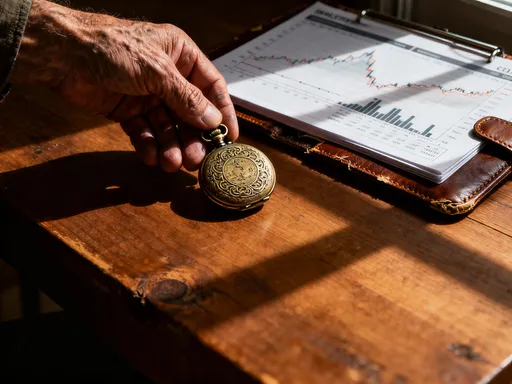
What My Family’s Heirloom Taught Me About Smarter Investing
Growing up, the most valuable thing my family passed down wasn’t money—it was a centuries-old piece of art, deeply meaningful but impossible to cash out. When I finally inherited it, I realized something: cultural treasures alone won’t pay the bills. That moment sparked my journey into asset diversification. I started asking real questions—how do you honor legacy while building financial security? This is the path I took, one mistake, lesson, and small win at a time. What began as a quiet realization in a cluttered attic became a lifelong pursuit of balance: between tradition and practicality, emotion and logic, memory and future. The artifact still holds pride in my home, but now it shares space with something equally important—knowledge that true security comes not from what we inherit, but how we manage it.
The Inheritance That Changed Everything
When my grandmother passed, she left behind more than stories and recipes—she entrusted me with a hand-carved wooden screen, said to have survived wars and migrations, passed down through five generations. It stood nearly six feet tall, its surface etched with intricate floral patterns that shimmered in the light. Family members gathered around it during holidays, touching its edges as if drawing strength from the past. To them, it was sacred. To me, at first, it felt like an honor beyond measure. I placed it in the living room, where guests often paused to admire it, asking about its origins. But admiration doesn’t cover utility bills. A few months later, my car broke down, medical expenses mounted, and I found myself staring at that beautiful screen, wondering if I could borrow against it—or sell a corner of it, like slicing off a piece of history to survive the present.
The truth is, I had no idea how to value it. No appraiser in my city specialized in that era or region. The few quotes I received varied wildly—one said it might fetch $8,000 at auction, another warned it could sit unsold for years due to limited buyer interest. Meanwhile, storage costs and insurance premiums began adding up. What I once saw as a symbol of continuity started to feel like a burden. This was not a failure of the object, but of preparation. My family had preserved culture meticulously, yet never discussed financial readiness. No one had taught me how to translate emotional value into economic resilience. That gap—between heritage and practicality—forced me to confront a hard reality: loving something deeply doesn’t make it liquid. And when life demands cash, sentiment cannot substitute for strategy.
It wasn’t resentment I felt, but responsibility. I didn’t want to sell the screen—not out of obligation, but out of respect. Yet I also didn’t want to repeat the cycle, leaving future generations with beauty but no backup plan. That tension became the catalyst for change. I began reading about personal finance, not as a distant concept for wealthy investors, but as a survival tool for ordinary people like me. I realized that honoring the past didn’t require clinging to every physical remnant. True respect might mean ensuring the family line continues not just in memory, but in stability. The screen remained in my home, but my mindset shifted. I started seeing wealth not as a single object, but as a system—one that could protect both tradition and tomorrow.
Why Cultural Inheritance Isn’t Enough
Across many families, especially those shaped by migration, displacement, or long histories, cultural inheritance takes center stage. Heirlooms, land deeds, religious artifacts, or ancestral homes are treated as sacred links to identity. These objects carry stories, resilience, and pride. But they also come with limitations that are rarely discussed. The most significant is liquidity—the ability to convert an asset into cash quickly without losing value. A painting, a plot of rural land, or a piece of jewelry may hold immense sentimental worth, but none can be partially liquidated like a savings account or stock portfolio. You can’t sell 20% of a family altar or half a vintage rug to cover a sudden expense. Either you sell the whole thing—potentially breaking emotional bonds—or you go without.
Another challenge is valuation. Unlike publicly traded stocks or government bonds, which have daily market prices, most cultural assets lack transparent pricing. Determining their worth often requires specialized experts, and even then, the final sale price can differ drastically from the appraisal. Market demand fluctuates, and niche items may have only a handful of potential buyers worldwide. This uncertainty makes planning difficult. You can’t build a retirement strategy around something whose value might drop by half in a downturn or take years to realize. Moreover, ownership often brings hidden costs—insurance premiums, climate-controlled storage, restoration work, property taxes on inherited land, or legal fees tied to unclear titles. Over time, these expenses erode the asset’s net benefit, sometimes turning a cherished gift into a financial drain.
Putting all your trust in cultural inheritance is like building a house on sand. It may look solid, especially when viewed through the lens of tradition, but it lacks structural flexibility. Natural disasters, economic shifts, or personal emergencies expose its fragility. History shows us that even families with vast landholdings or treasured collections have faced collapse when cash was needed fast. Wealth that cannot adapt is wealth at risk. This doesn’t mean cultural assets are worthless—they are invaluable in shaping identity and continuity. But they should not be the sole foundation of financial well-being. A balanced approach recognizes their role while supplementing them with instruments that provide access, growth, and protection. The goal isn’t to replace tradition, but to ensure it survives by pairing it with practical tools that meet real-world demands.
The First Step: Seeing Assets Differently
For most of my life, I equated assets with things I could touch—my home, my car, the wooden screen in the corner. Savings accounts felt like the only ‘real’ money, while investments seemed like gambling for people who wore suits and watched stock tickers all day. That mindset changed when I attended a community financial literacy workshop, where a speaker asked a simple question: ‘What does your money do when you’re asleep?’ I realized mine did nothing. It sat in a low-interest account, slowly losing value to inflation. Meanwhile, other people’s money was working—earning dividends, compounding returns, generating passive income. That moment reframed everything. I began to see assets not as static possessions, but as active tools capable of growth and protection.
An asset, I learned, is anything that has value and can potentially produce future benefits. This includes cash, yes, but also equities (stocks), bonds, real estate, retirement accounts, and even skills or education. Each type behaves differently. Cash is safe but loses purchasing power over time. Stocks offer higher long-term returns but come with volatility. Bonds provide steady income with lower risk. Real estate can appreciate and generate rent, but requires management and capital. The key insight was that no single asset class performs best all the time. Markets shift, economies evolve, and what works today may not tomorrow. By understanding these differences, I could start thinking strategically—how to combine them in a way that balanced risk and reward.
This shift in perspective allowed me to move beyond emotional attachment. The wooden screen was still meaningful, but I no longer saw it as my only form of wealth. Instead, I began building a portfolio—small at first, but growing steadily. I opened a brokerage account with a modest sum, invested in low-cost index funds that tracked the broader market, and set up automatic contributions from my paycheck. I treated each deposit not as a gamble, but as a step toward stability. Over time, I added bonds for balance, explored real estate investment trusts (REITs) for exposure to property without direct ownership, and prioritized emergency savings as a buffer against surprises. Seeing assets as dynamic tools didn’t diminish my respect for heritage—it expanded my definition of legacy to include foresight, discipline, and resilience.
Diversification Isn’t Just for the Rich
One of the biggest myths I had to overcome was that diversification is only for the wealthy. I assumed you needed tens of thousands to build a balanced portfolio. The truth is, even small investors benefit significantly from spreading risk. Diversification means owning a mix of assets that don’t move in lockstep—so when one dips, others may hold steady or rise. This reduces the chance of catastrophic loss and smooths out returns over time. You don’t need millions to do this. With as little as $50 a month, you can gain exposure to hundreds of companies through index funds, which pool money to buy a broad slice of the market.
I started with just $100. I split it between a total stock market fund and a bond index fund. It wasn’t much, but it was a start. Over the next few years, I added more, adjusted the mix as my income grew, and reinvested dividends. The power of compounding began to show—not overnight, but steadily. What surprised me most was how psychological the process was. At first, I watched the balance daily, anxious every time it dropped. But over time, I learned to trust the strategy. Markets fluctuate, but history shows that broad indexes tend to rise over the long term. Because I wasn’t relying on a single stock or sector, a downturn in technology or energy didn’t wipe me out. My bond holdings often softened the blow, and my automatic contributions allowed me to buy more shares when prices were low—a practice known as dollar-cost averaging.
The real advantage of early diversification is time. Starting small but consistently allows compound growth to work in your favor. A $200 monthly investment earning an average of 6% annually could grow to over $100,000 in 25 years, even without increasing the contribution. This isn’t a promise of riches, but a realistic outcome based on historical market behavior. The point isn’t to get rich quickly, but to avoid ruin and build steady progress. For families that have relied on a single asset for generations—like farmland or a family business—diversification offers a safety net. It ensures that if one part of the portfolio struggles, others can support the whole. Financial security doesn’t come from one big win—it comes from consistent, thoughtful choices that reduce vulnerability and increase resilience.
Building Your Mix: A Practical Framework
So, what does a diversified portfolio look like for someone starting from scratch? There’s no one-size-fits-all formula, but there are guiding principles. First, assess your situation: age, income, financial goals, and risk tolerance. A 30-year-old saving for retirement can afford more risk than a 55-year-old nearing retirement. Then, decide on a basic allocation—how much to allocate to stocks, bonds, and other assets. A common starting point is the ‘age in bonds’ rule: subtract your age from 100 (or 110 for longer life expectancy) to estimate your stock allocation. For example, a 40-year-old might aim for 60–70% in stocks and the rest in bonds. This isn’t rigid, but a baseline to adjust based on personal comfort and goals.
Next, choose low-cost, diversified investments. Index funds and exchange-traded funds (ETFs) are ideal for beginners. They offer instant diversification across hundreds or thousands of securities, with fees far lower than actively managed funds. For example, a total U.S. stock market fund gives exposure to large, mid, and small-cap companies across industries. Pair it with a total bond market fund for balance. If you want global exposure, add an international index fund. Real estate can be included through REITs, which trade like stocks but invest in income-producing properties. These options allow access without the burden of direct ownership, maintenance, or large down payments.
Keep the structure simple and automated. Set up regular transfers to your investment accounts, just like a utility bill. Automate contributions to your chosen funds so discipline doesn’t rely on willpower. Rebalance once a year—sell a little from assets that have grown too large and buy more of those that have lagged, returning to your target mix. This maintains your risk level and enforces a ‘buy low, sell high’ discipline without emotion. Also, maintain an emergency fund in a high-yield savings account—three to six months of expenses—to avoid selling investments during downturns. This framework isn’t flashy, but it’s effective. It prioritizes consistency over timing, balance over speculation, and long-term growth over short-term thrills.
Avoiding the Emotional Traps
Even with a solid plan, emotions can derail progress. I nearly made a costly mistake when I considered using part of my inheritance to buy a larger share of my hometown property—a plot tied to childhood memories. Logically, it didn’t fit my portfolio goals. The land had no immediate income potential, required upkeep, and was highly concentrated in one location. But emotionally, it felt like reclaiming a piece of my roots. I hesitated for months, torn between nostalgia and strategy. What saved me was a simple habit: writing down my investment rules and reviewing them before major decisions. I had committed to diversification, low costs, and long-term focus. Buying the land violated all three. I walked away, not because I didn’t care, but because I cared too much to risk the future for the past.
Emotional traps are common. Fear leads people to sell during market drops, locking in losses. Greed pushes others into speculative bets chasing quick gains. Attachment makes it hard to let go of underperforming assets, whether a family business or an inherited home. Impatience causes frequent trading, increasing costs and taxes. These impulses are natural, but they undermine financial health. One way to counter them is to define your strategy in advance and stick to it. Set clear rules: maximum allocation per asset, minimum diversification thresholds, rebalancing schedules. Use automatic investing to reduce decision fatigue. Keep a journal to reflect on choices—what you did, why, and whether it aligned with your goals. Over time, this builds discipline and clarity.
Honoring culture doesn’t require financial sacrifice. In fact, true respect for legacy means ensuring it endures. That requires making hard choices, sometimes saying no to emotionally appealing but financially unsound moves. It means teaching younger family members that love isn’t measured by clinging to objects, but by creating stability that allows future generations to thrive. I still visit the ancestral village, still cherish the wooden screen. But now, I also talk openly about budgets, investments, and estate planning—conversations once considered taboo. By facing emotions head-on and anchoring decisions in principles, I’ve found a way to respect the past without being trapped by it.
Passing It Forward: Legacy Meets Long-Term Planning
Wealth isn’t truly preserved until it’s successfully transferred. I’ve begun teaching my nieces and nephews about money not through lectures, but through practice. Each year, I give a small sum as a ‘learning gift,’ with one condition: they must invest half and track it for a year. We review their choices together, discussing what worked, what didn’t, and why. Some chose tech stocks, others preferred funds. All learned about volatility, patience, and research. These conversations plant seeds. I also encourage open family discussions about inheritance, wills, and trusts—not as morbid topics, but as acts of care. A trust, for example, can protect assets from probate, reduce taxes, and ensure minors receive support responsibly. A will clarifies intentions, preventing disputes. These tools don’t replace love, but they protect it by reducing conflict during difficult times.
I’ve updated my own estate plan to reflect a blended legacy. The wooden screen will pass to a relative who values it deeply, with instructions for preservation. But I’m also setting up custodial accounts for younger family members, funded gradually with diversified investments. My hope is that they inherit not just objects, but financial literacy—the ability to grow, protect, and share wealth wisely. True legacy isn’t about how much you leave behind, but how well it’s managed. By combining cultural respect with modern planning, we create a foundation that lasts beyond memory. It’s not about rejecting the past, but enriching it with foresight. The artifacts will fade, but the lessons—about balance, discipline, and long-term thinking—can endure for generations.
Real legacy isn’t measured in artifacts, but in resilience. By blending cultural respect with smart diversification, we create something more enduring than any single asset—a foundation that supports freedom, choice, and peace of mind for decades to come. The wooden screen still stands in my living room, a quiet reminder of where I come from. But beside it, on a bookshelf, sits a binder labeled ‘Portfolio & Plan.’ It’s updated quarterly, filled with statements, goals, and reflections. Together, they represent a new kind of inheritance—one that honors the past while securing the future. Wealth that lasts isn’t built in a day, or even a lifetime. It’s grown, nurtured, and passed forward with intention. And that, more than any object, is what I hope to leave behind.