How I Forecast Markets Without Losing My Mind — A Pro’s Take on Smarter Spending
What if you could spend less and invest smarter just by seeing market shifts before they happen? I’ve been there—overspending during false booms, panic-cutting budgets at the worst time. But after years in financial planning, I learned that real control isn’t about cutting coffee runs. It’s about predicting trends, aligning expenses with market signals, and staying ahead without burning out. This is how forecasting became my secret weapon—for profit, peace, and smarter decisions. By understanding the rhythm of the economy, I stopped reacting and started preparing. The result? Fewer financial surprises, more confidence in choices, and a steady path toward long-term stability.
The Hidden Cost of Blind Budgeting
Many people believe that financial discipline means sticking to a fixed budget no matter what. They track every dollar, set spending caps, and celebrate when they stay under budget. Yet, despite their diligence, they often find themselves financially strained when the economy shifts unexpectedly. The truth is, a rigid budget without awareness of broader market trends can be more harmful than helpful. Blind budgeting—the practice of managing finances without regard to economic cycles—leads to poor timing, emotional decision-making, and missed opportunities. It creates a false sense of security, only to collapse when inflation rises, interest rates shift, or industries slow down.
Consider the professional who maintains a consistent marketing budget throughout the year, only to realize that their industry is entering a downturn. Without adjusting spending in anticipation of lower demand, they continue investing in campaigns that yield diminishing returns. By the time they cut back, revenue has already dropped, and the damage is done. Similarly, households that fail to anticipate rising grocery or energy prices may find their carefully planned budgets overwhelmed by external forces. These are not failures of willpower—they are failures of foresight. Reactive budgeting forces people to make drastic cuts at the worst possible moments, often selling investments low or delaying necessary purchases until prices rise again.
The cost of this approach goes beyond money. It includes stress, regret, and a loss of confidence in one’s financial judgment. People begin to doubt their ability to manage money, not realizing that the system itself is flawed. Traditional budgeting assumes a stable environment, but the real world is dynamic. Markets move in cycles—expansion, peak, contraction, and recovery—and each phase requires a different financial strategy. Ignoring these shifts means operating in the dark, where every economic change feels like a surprise. The solution is not stricter budgets, but smarter ones—budgets informed by market signals and adjusted with purpose.
Blind budgeting also leads to inefficient allocation of resources. When you don’t anticipate changes, you miss opportunities to shift spending toward high-value areas. For example, during periods of low interest rates, it may be wise to refinance debt or invest in home improvements. Without forecasting, these moments pass unnoticed. Conversely, when inflation begins to rise, it’s better to lock in prices for essential goods or services. Without awareness, people pay more than necessary. The real cost of blind budgeting is not just what you spend, but what you fail to avoid—and what you fail to seize.
Forecasting: Not Just for Wall Street
Many people assume that market forecasting is only for financial experts with advanced degrees and access to complex data. They imagine traders staring at screens filled with charts and algorithms, making split-second decisions based on obscure indicators. But the truth is, forecasting is not about predicting the future with perfect accuracy. It’s about recognizing patterns, understanding trends, and making informed decisions. You don’t need a Bloomberg terminal or a team of analysts. What you need is awareness, consistency, and a few reliable tools that anyone can use.
At its core, forecasting is about asking the right questions: Is consumer confidence rising or falling? Are businesses hiring or cutting back? Are interest rates trending up or down? These signals are publicly available and often reported in mainstream news. The key is knowing where to look and how to interpret the information. For instance, when unemployment claims drop over several weeks, it often signals economic strength and potential inflation. When consumer spending slows, it may indicate a coming downturn. These are not secret insights—they are observable trends that can guide everyday financial choices.
One common misconception is that forecasting requires certainty. In reality, it’s about probability and preparation. You don’t need to know exactly when a recession will happen—only that conditions are shifting in a way that warrants caution. Think of it like weather forecasting. You don’t cancel your plans because there’s a 30% chance of rain, but you might pack an umbrella. Similarly, if economic indicators suggest a slowdown, you might delay a large purchase or increase your emergency fund. The goal is not to be right every time, but to reduce risk through better timing.
There are several accessible tools that can help. The Consumer Confidence Index, released monthly by The Conference Board, measures how optimistic people feel about the economy. A declining index often precedes reduced spending. The Federal Reserve’s interest rate decisions influence borrowing costs and investment returns. Monitoring these changes helps you decide when to lock in a mortgage rate or shift from bonds to cash. Commodity prices, such as oil and wheat, can signal inflationary pressures. When oil prices rise, transportation and production costs go up, which often leads to higher prices for goods and services. These indicators don’t require advanced training to understand—they just require attention.
Aligning Expenses with Economic Cycles
The economy moves in cycles, and each phase has distinct characteristics that affect spending, saving, and investing. Recognizing these phases allows you to adjust your financial behavior proactively rather than reactively. During expansion, consumer demand rises, businesses grow, and employment increases. This is often the best time to invest, hire, or expand operations. But it’s also a time to be cautious about overextending—because peaks are often followed by corrections. In contrast, during a slowdown or contraction, demand weakens, layoffs occur, and uncertainty grows. This is when prudence pays off—preserving capital, reducing non-essential spending, and preparing for recovery.
Understanding where we are in the cycle helps answer critical questions: Should I make a big purchase now? Is it time to refinance? Should I hold off on a new project? For example, during the early stages of recovery, supply chain bottlenecks may still exist, but demand is picking up. This is a good time to invest in inventory or production capacity before prices rise further. Conversely, if leading indicators suggest a slowdown is approaching, it may be wise to delay major expenses or accelerate receivables. The key is to act before the trend becomes obvious to everyone else.
One effective way to track the cycle is through leading indicators—data points that change before the economy as a whole shifts. The yield curve, for instance, has historically been a reliable predictor of recessions. When short-term interest rates exceed long-term rates, it often signals that investors expect slower growth. While this may sound technical, the takeaway is simple: when the yield curve inverts, it’s time to be more conservative with spending and investments. Similarly, new orders for durable goods reflect business confidence. A decline suggests companies are pulling back, which may foreshadow layoffs and reduced consumer spending.
Households can apply this same logic. If job growth is slowing and inflation is rising, it may be time to tighten the budget even if current income remains stable. If housing prices are surging and mortgage rates are low, it could be an opportune moment to buy—but only if long-term affordability is secure. The goal is not to time the market perfectly, but to align decisions with the broader economic context. This reduces the risk of making costly mistakes, such as buying high or selling low, and increases the likelihood of making choices that support long-term stability.
Building a Sensing System for Your Finances
You don’t need a complex financial model to benefit from forecasting. What you need is a simple, consistent system for monitoring key signals—what I call a “financial radar.” This isn’t about tracking dozens of metrics or spending hours on analysis. It’s about identifying a few reliable indicators and reviewing them regularly. Think of it like a health checkup: you don’t need a full diagnostic every day, but periodic check-ins help you catch issues early.
Start by selecting three to five indicators that matter most to your financial situation. For most people, these might include inflation rates, interest rate trends, consumer confidence, unemployment data, and housing market activity. These are all publicly available and updated monthly. You can find them on government websites like the Bureau of Labor Statistics or through trusted financial news sources. Set a recurring calendar reminder—perhaps once a month—to review these numbers. Over time, you’ll begin to see patterns and understand how they relate to your own spending and investment decisions.
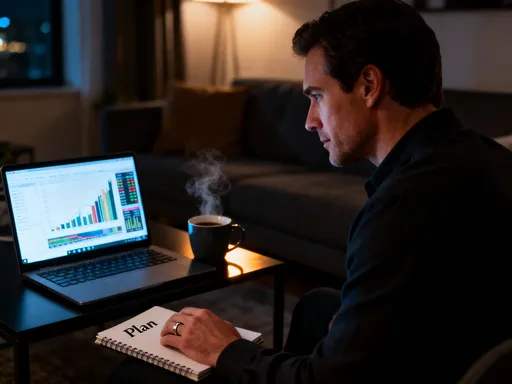
To make this easier, consider creating a personal dashboard. This could be a simple spreadsheet or a notes file where you record each indicator and note any changes. For example, if inflation has increased for three consecutive months, you might add a reminder to review your grocery and utility budgets. If interest rates are expected to rise, you might explore refinancing options before they go up. The act of recording and reviewing builds awareness and makes forecasting a habit rather than a burden.
Another useful tool is sentiment analysis—paying attention to how people and businesses are behaving. Are restaurants busy? Are companies announcing new hires or layoffs? Are friends talking about cutting back on travel or dining out? These anecdotal clues, when combined with hard data, can provide early warnings of economic shifts. For instance, if you notice more “for lease” signs in your neighborhood and fewer job postings, it might signal a local economic slowdown. This kind of observation doesn’t require expertise—just mindfulness.
The goal of your financial radar is not to predict every twist and turn, but to stay informed enough to avoid being caught off guard. It transforms you from a passive participant in the economy to an active observer. Over time, this small effort compounds into better decisions, reduced stress, and greater confidence in your financial path.
Risk Control Through Smarter Timing
One of the biggest financial mistakes people make is timing their decisions based on emotion rather than evidence. They cut spending when markets are already low, sell investments in panic, or overcommit during periods of false optimism. These reactions often do more harm than good. The real power of forecasting lies in timing—not just knowing what to do, but when to do it. By aligning actions with market conditions, you reduce risk and improve long-term outcomes.
Consider two investors during a market downturn. One panics and sells all their stocks, locking in losses. The other, who has been monitoring economic indicators, sees the downturn as temporary and uses the dip to buy high-quality assets at lower prices. Over time, the second investor builds wealth while the first struggles to recover. The difference isn’t intelligence or access to information—it’s timing. Forecasting helps you avoid the trap of reactive decision-making by providing a framework for calm, rational choices.
Smarter timing also applies to everyday spending. For example, if you know that inflation is likely to rise in the next six months, you might choose to make large purchases now—such as a car or appliance—before prices go up. Conversely, if housing markets are overheated and interest rates are expected to rise, it may be better to wait before buying a home. These decisions aren’t about speculation—they’re about using available information to make more informed choices.
Another example is business spending. A company that forecasts a slowdown might choose to delay non-essential projects, renegotiate contracts, or build up cash reserves. This doesn’t mean cutting everything—it means prioritizing. When the downturn comes, they’re not scrambling to survive; they’re positioned to endure and even gain market share. In contrast, companies that ignore signals often face layoffs, debt, or closure because they acted too late.
The key insight is that risk isn’t just about what you do—it’s about when you do it. A good decision at the wrong time can still lead to poor results. Forecasting helps you match your actions to the economic environment, reducing exposure to volatility and increasing the odds of success. It’s not about eliminating risk—nothing can do that—but about managing it more effectively.
From Data to Decisions: Making It Practical
Knowing what to track is only half the battle. The real challenge is turning insights into action without overcomplicating the process. Many people get stuck in analysis paralysis—collecting data but never making decisions. The goal is not to become a data analyst, but to use information to improve financial outcomes. A simple, structured approach can bridge the gap between awareness and action.
I recommend a three-step filter: assess relevance, test impact, then scale. First, ask whether the insight matters to your situation. For example, if housing prices are rising in another state, but you’re not planning to move, it may not be relevant. Focus on signals that directly affect your income, expenses, or investments. Second, test the impact. If inflation is rising, run a quick calculation: how much more will you spend on groceries or utilities over the next year? This makes the abstract concrete. Third, scale your response. If the impact is significant, adjust your budget or savings plan. If it’s minor, make a small change or just monitor it.
Let’s look at a real-life scenario. A small business owner notices that consumer confidence has declined for three months, and their industry’s sales growth has slowed. Instead of cutting marketing across the board, they analyze which campaigns are still performing. They pause low-return digital ads but maintain investment in customer retention programs, which have proven resilient. They also delay a planned office expansion but keep key hires. By using data to guide decisions, they save 18% in operating costs without harming long-term growth. Six months later, when the market stabilizes, they’re in a stronger position than competitors who made blanket cuts.
This approach works for households too. If you see that energy prices are trending upward, you might decide to invest in insulation or switch to a fixed-rate utility plan. You don’t need to overhaul your entire lifestyle—just make targeted adjustments. The power of forecasting lies in its precision. It allows you to spend wisely, not just less, and to invest with confidence, not fear.
The Long Game: Stability Over Short Wins
Financial success is not measured by how much you cut from your budget or how many trades you make in a year. It’s measured by consistency, resilience, and peace of mind. The true value of forecasting is not in capturing every market move, but in building a financial life that can withstand change. It’s about replacing anxiety with clarity, and reaction with preparation. When you understand the economic landscape, you don’t need to fear every headline or market swing. You can make decisions with confidence because you see the road ahead.
This is not about becoming wealthy overnight. It’s about avoiding costly mistakes, preserving capital, and making steady progress. The most successful financial managers aren’t those who chase high returns—they’re the ones who avoid major losses. They don’t panic when markets fall, and they don’t overextend when times are good. They stay aligned with reality, adjusting their plans as conditions change.
Ultimately, forecasting is a tool for empowerment. It gives you agency in a world that often feels unpredictable. You don’t need to control the economy—you just need to understand it well enough to navigate it. By combining sensible spending with market awareness, you create a foundation for long-term stability. You spend with purpose, save with confidence, and invest with discipline. And in doing so, you achieve something far more valuable than short-term gains: financial peace.